




SOCIAL SALES EXPERTS
  • Home
  • Blog
    • Social Media Poll
  • Subscribe
  • About
    • Processes
    • Story
    • F.A.Q.
  • Services
    • Social Sales Services
    • Social Selling Sales Training
    • Advanced Sales Program
    • Power Sales Workshop
    • Sales Training Boot Camp
    • Sales Consultant Training
  • Testimonials
  • Contact
  • Our Approach
  • University
  • Digital IQ Quiz
Social Selling HQ

NEWS

​Be In The Know


What is virtual training and why it's so important

4/4/2022

0 Comments


Written By : Thomas Ross

What is Virtual Training Certification
Virtual Certification

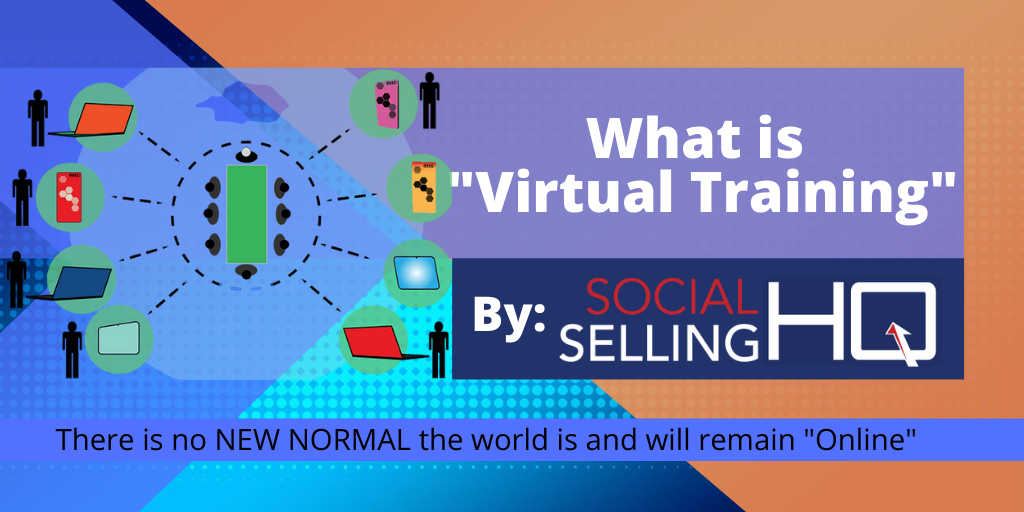
Is "Virtual Training" the same as “Online Training?"


​Virtual training is most commonly understood to be “Online Training.” 
However, there are significant differences in how these training sessions can be conducted

The various types of Virtual Training are;
  1. Pre-recorded and automated training
  2. Facilitated and live online training
  3. Hybrid training leveraging both recorded as well as live segments 
  4. Lesson based training done in step by step segments or units, usually spread over time
  5. Hands-on training, working on an individual basis / online sessions but "live"
  6. Team training with larger groups but all working from individual devices
  7. Collaborative training for teams working together with a facilitator, this type of training is meant to be highly interactive
Many of these can be very effective depending on the nature of the training and the topic
We find for skill-based training ie, where skills are being learned and actually practiced,  the best format is facilitated with live online group training followed by Hands-on training for each individual
Depending on the length of the program this can be rotated every week to meet the requirements of the program

This also allows for certification to be offered as part of the program where applicable
​
Key elements to successful virtual training
Virtual Training

Key elements to successful virtual training


There are a number of key ingredients necessary to make for successful “Virtual Training” programs. 
  A) Technology
  • The right video conferencing environment for your needs / working from home, from an office or custom space?
  • The right hardware for your needs from computers to monitors and video cameras 
  • The right software applications to ensure that your participants can easily work with and or convert to their own needs by way of materials or through an  online library
  • Continued live virtual support, ie a separate Chat room or virtual space where participants can get help during or after session(s)
  • What equipment and or technology do your participants require? This too has to be considered and built in to your program
 Here are a couple of helpful links to get you started: 
  • https://www.lifesize.com/en/video-conferencing-blog/best-video-conferencing-equipment
  • https://tech.co/web-conferencing/best-video-conferencing-equipment
 
  B) Skilled Facilitators

This is no longer about simple presentations done by a good speaker!
  • This is about a skilled facilitator who brings your material to life through all the tools, processes, and technologies you provide....all while keeping everyone ACTIVELY ENGAGED!
  • Depending on the nature of the materials, using a co-facilitator can make it more interesting and lively ​
  • These facilitators are not easy to find and in fact are more likely to be trained by you through your programs
  • The best facilitators are not necessarily the best speakers but rather those that keep everyone interacting throughout the program

  C) Program outline and content
  • Like everything else in today’s world, it’s all about the content!
  • Your programs need to be engaging, enlightening, and most importantly, INTERACTIVE!
  • There are many tools available to do this including live polling, online breakout rooms, games, etc
  • Active and ongoing participation is critical as well as keeping the topics tight and focused, no speeches, please!!
  • For most 45-60 minute sessions, (and especially when there are groups) it’s important to have an interactive activity every 3-5 minutes,         so build this in from the start!
  • Limit your use of pre-recorded content as this is generally not well received and does not have as lasting an impact on the participants
  • This means that the days of online autonomous videos are numbered!
  • Bring in outside personalities and resources where it makes sense to do so 
  • Once you have a program in draft, test, test and test some more using real-life scenarios and even real participants
  • To ensure ongoing improvement, continue to adapt the program for new technologies as well as the changing needs of your customers

    HOW BIG SHOULD YOUR SESSIONS BE?
  • Ideally, your group sizes should not be overwhelming either for your facilitator or for your participants
  • Generally, this means 3 to 10 is about max. Anything over and engagement will suffer badly
  • If your enrollment or group is larger, break it up and add more to compensate DO NOT TRY AND DO LARGE GROUPS if you do not have a process to ensure successful virtual training
  • Webinars of the past, or at least many of them failed for this reason
​
Why is Virtual Training Certification Important
Certification

Why is Certification Important?


  D) Certification and participant ongoing input / “Virtual Certification”
  • Providing the participants with both an overview of their success and a hard copy document certifying completion of the program is a must. You can also include a electronic certificate but for best results we find that both work best
  • In addition, it’s very powerful incentive to provide ratings of their new skill levels, where applicable, ie, Gold, Silver, Bronze...
  • Give all participants the opportunity to boast about their success on your social media pages, nothing is more powerful than first-hand, real-time testimonials
  • This is not only great for participants going forward but allows branding and marketing of your virtual training long after it’s been completed 
  • This allows for branding and marketing to be more easily done while leveraging your successful participants to spread the word /  Brand Advocacy 

    E) Marketing
  • In the end successful marketing will allow you to maximize both registration for the program as well as revenues, what's more important than that?
  • Creating a buzz about your programs, courses or training is all about working your networks effectively well ahead of time
  • What is the key value participants are to gain from your virtual training? (This needs to be built into your content)
  • What are the kinds of questions one might google when looking for this kind of training?                                                                                                                                                                     (This allows for SEO to drive leads and participants to your program)
  • These are the questions you need to answer so that you can build your online social marketing plan
  • You also need to do a customer profile of those that would be participants so you can effectively communicate with them in their language and where they are most likely to see your content
  • Think content marketing and begin building an audience as well as participation at least “3” months ahead of time

    F) Technology - yes, again!
  • Undoubtedly some of your technology choices will fail
  • Undoubtedly some of your participant’s technology or tools will fail
  • Have a contingency plan for as many circumstances as you can guess at and then practice these scenarios before you officially begin
  • Just because everything went perfect the one or two times you practiced is not good enough
  • Assemble random test participants and test again! 
  • You won’t catch everything but you will catch the big or catastrophic fails
  • *Remember, in our new virtual and online world you only get one chance. Once participants are done they will immediately become great advocates for referrals OR your worst nightmare on social media!
  • So get as much right the first time as possible and treat your participants like gold because they are!!​                                                                                                                                                     
Virtual Training Best Results - What's next
Virtual Training - What's next

What are the Best Results?


So in the end how do you know your virtual training program (s) are successful?

  • Repeat customers. Are your customers coming back for more?
  • Growing enrollment for ongoing virtual training programs
  • Growing social media followers and networks on your social media pages
  • Excellent ratings on your google page, Facebook page etc
  • Revenue...you guessed it, your making more money! This could be based on the costs of the programs delivered and or from happy customers who are now buying more of your services

Lastly, 
Don’t forget, virtual training is a defined and required skill set you need to develop to be successful
There are a number of ways to begin to practice this in order to become effective
  1. Make short videos of your delivery of your "Virtual Training",  so you and your facilitator can become highly skilled at this
  2. As mentioned before practice, practice, practice…
  3. Be very prepared and methodical, have your sessions laid out so you cover what is needed effectively
  4. Be prepared to take individuals offline by way of separate sessions where required and needed. Trying to answer all questions during time will lead to overruns and lose of engagement, further simply wont' be as effective
  5. Make sure to turn your best participants into "ROCK-STARS!" Make them famous to their networks and they will do likewise for your Virtual Training programs
  6. HAVE FUN and be enthusiastic! 

​
Virtual Training Expert Thomas Ross Thomas Ross / Pro-Certified Social Selling & Training Expert


​Contact Thomas
LinkedIn 
Website
Twitter
​Facebook

Contact Social Selling HQ
  • twitter   
  • LinkedIn
    Facebook


0 Comments


Leave a Reply.

    FREE SALES TIPS

    Rick Rea &
    ​Thomas Ross

    Social Selling and SEO Training Experts

    Social Selling News and Updates from around the Social Media industry.

    RSS Feed

Is Your Organization Social Selling?

Sign Up For Free Sales Tips

Home | About Us | Testimonials | Sales Training Boot Camp | Power Sales Workshop | Advanced Sales Program | Contact | News
1531 32nd St S, Unit 118
​Fargo, ND 58103

​701-658-5557
Copyright © 2019 - 2025 Social Selling Headquarters  |  Privacy Policy
social media training, social sales hq, social selling headquarters, social sales, social sales USA, social sales 101, social selling bootcamp, social selling training, social sales services, social media marketing, social media consulting, sales bootcamp
Photos from wuestenigel (CC BY 2.0), Official U.S. Navy Imagery, wuestenigel
  • Home
  • Blog
    • Social Media Poll
  • Subscribe
  • About
    • Processes
    • Story
    • F.A.Q.
  • Services
    • Social Sales Services
    • Social Selling Sales Training
    • Advanced Sales Program
    • Power Sales Workshop
    • Sales Training Boot Camp
    • Sales Consultant Training
  • Testimonials
  • Contact
  • Our Approach
  • University
  • Digital IQ Quiz